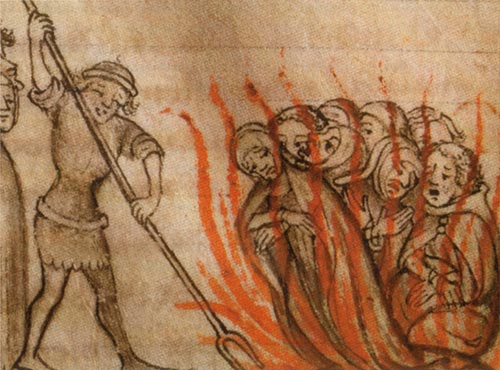
Acting on secret orders sealed weeks earlier, royal officers throughout France seized Templar knights simultaneously at dawn, charging them with heresy, blasphemy, and corruption. Deeply in debt to the order and eager to seize its wealth, Philip IV moved with a coordination remarkable for the era, catching most Templars completely by surprise.
Friday the 13th's sinister reputation owes much to this date. Philip IV, crushed by war debts and jealous of the Templars' independent wealth and power, spent weeks preparing sealed instructions to be opened simultaneously by bailiffs across France. When they were unsealed on the morning of October 13, 1307, royal officers arrested Templars in every major city at once, seizing their properties and records before anyone could resist or flee.
The charges were lurid and largely fabricated: idol worship, spitting on the cross, homosexual initiation rites. Many knights, tortured in royal dungeons, confessed to whatever their interrogators wanted to hear. Grand Master Jacques de Molay himself confessed under duress, later recanted, and was ultimately burned at the stake in 1314, reportedly cursing Philip and Pope Clement V with his dying breath, predicting both would die within the year. Both did.
The order, which had guarded pilgrims and fought in the Crusades for nearly two centuries while amassing a sophisticated banking network across Europe, dissolved entirely by 1312. The speed and secrecy of the October 13 arrests would later feed centuries of conspiracy theories, secret societies, and the enduring folklore linking Friday the 13th to catastrophe.
Key people: Philip IV of France, Jacques de Molay, Pope Clement V