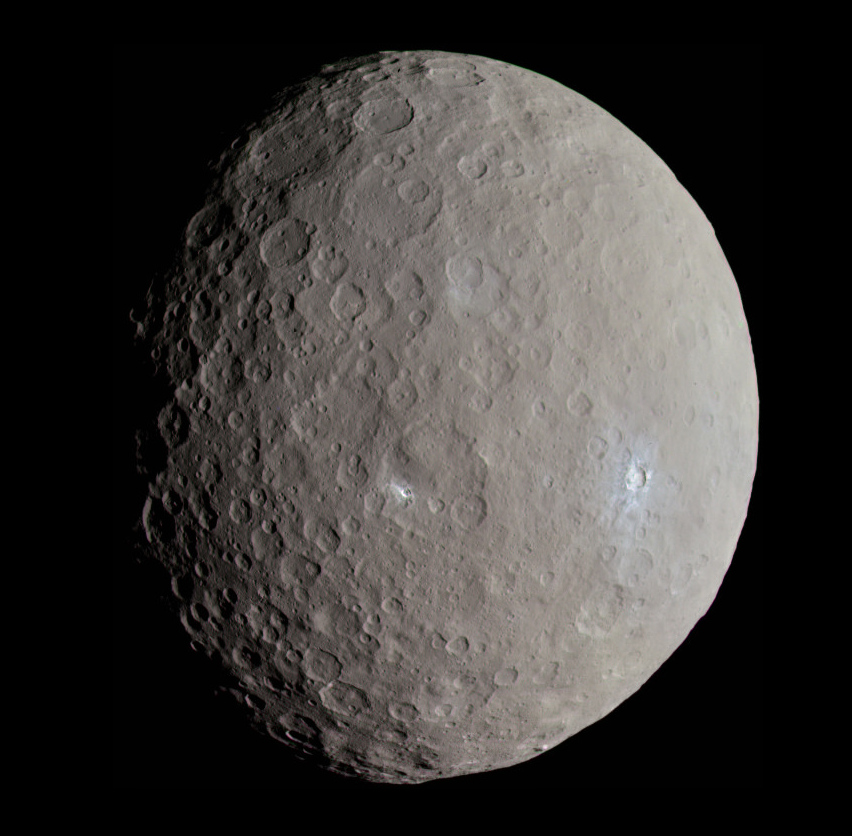
Though Giuseppe Piazzi first spotted Ceres on January 1, 1801, it was through subsequent tracking and Carl Friedrich Gauss's orbital calculations that astronomers confirmed the object as a new planetary body between Mars and Jupiter — later reclassified as the first asteroid discovered, filling the gap predicted by the Titius-Bode law.
At a public meeting in London's St. Martin's Hall, delegates representing British, French, German, and Italian workers founded the International Workingmen's Association, later known as the First International. Karl Marx, invited as a German representative, drafted its inaugural address, positioning the organization as a vehicle for coordinated international labor and socialist activity that would influence movements for decades.

Around 9:50 p.m., an earthquake estimated at magnitude 7.0 struck near Charleston, South Carolina, toppling buildings, rupturing gas lines, and killing at least 60 people. Felt as far away as Boston and Chicago, it remains the most powerful and destructive earthquake ever recorded on the Eastern Seaboard, exposing the seismic vulnerability of a region long thought immune to such disasters.
At 4:45 a.m., the German battleship Schleswig-Holstein opened fire on Polish positions near Danzig while more than a million Wehrmacht troops crossed the frontier. The invasion, launched days after the staged Gleiwitz incident, prompted Britain and France to declare war on Germany two days later, igniting the Second World War.

Following the liberation of Paris in late August 1944, Charles de Gaulle's Provisional Government of the French Republic formally established itself in the capital on September 1, symbolically ending four years of Nazi occupation and beginning the delicate process of restoring French governance and prosecuting collaborators.

Test pilot André Turcat took the Concorde 001 prototype past Mach 1 for the first time, a milestone in the decade-long Anglo-French effort to build a commercially viable supersonic airliner. The achievement, following the aircraft's maiden flight in March, paved the way toward the Concorde's eventual 1976 entry into passenger service, which would cut transatlantic flight times in half.

While King Idris was abroad receiving medical treatment in Turkey, a group of young military officers led by Captain Muammar Gaddafi seized control of Tripoli and Benghazi in a nearly bloodless coup. Gaddafi, then just 27, declared the Libyan Arab Republic and would go on to rule the oil-rich nation for the next 42 years, until his violent overthrow in the 2011 Arab Spring.

Korean Air Lines Flight 007, en route from New York to Seoul with a stopover in Anchorage, drifted into Soviet airspace over Sakhalin Island. A Soviet Su-15 interceptor fired air-to-air missiles, downing the jumbo jet and killing all 269 passengers and crew, including U.S. Congressman Larry McDonald. The Cold War tragedy triggered international outrage and accelerated the deployment of civilian GPS technology.

Asteroid 3122 Florence, one of the largest near-Earth objects ever tracked by NASA and about 4.4 kilometers across, passed within 4.4 million miles of Earth — its closest approach since the asteroid's 1981 discovery. Radar imaging revealed two small moons orbiting it, and the flyby offered astronomers a rare close-range study of a potentially hazardous asteroid.
