Just after midnight on 3 February 1943, the German submarine U-223 torpedoed the US Army Transport Dorchester. The ship had sailed from St. John's, Newfoundland, as part of a convoy and was carrying more than 900 troops, merchant seamen and civilian workers bound for Greenland. It sank in about 20 minutes in freezing water, and most of the people aboard died. Four chaplains, a rabbi, a Catholic priest and two Protestant ministers, became symbols of self-sacrifice across faiths after they helped others to safety and stayed on board.
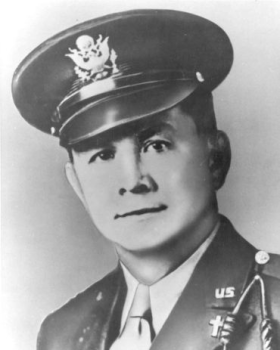
The torpedo hit in the dark, knocked out the ship's power, and filled the lower decks with steam and panic. Many men had ignored orders to sleep in their life jackets because the jackets were too uncomfortable. In the confusion, four Army chaplains moved among the soldiers, calming the frightened, tending the wounded and guiding men toward the lifeboats. They were George Fox, a Methodist; Alexander Goode, a Jewish rabbi; Clark Poling, of the Reformed Church in America; and John Washington, a Catholic priest.
When the supply of life jackets ran out, the four chaplains took off their own and gave them to young soldiers who had none. Survivors in the lifeboats later described the same image: four men standing on the tilting deck with their arms linked, praying together as the Dorchester went under the Labrador Sea.
None of the four survived. In 1960 the US Congress created a special Four Chaplains' Medal in their honour. Their story is still told as one of the defining images of courage shared across faiths in the Second World War.
Key people: George L. Fox, Alexander D. Goode, Clark V. Poling, John P. Washington