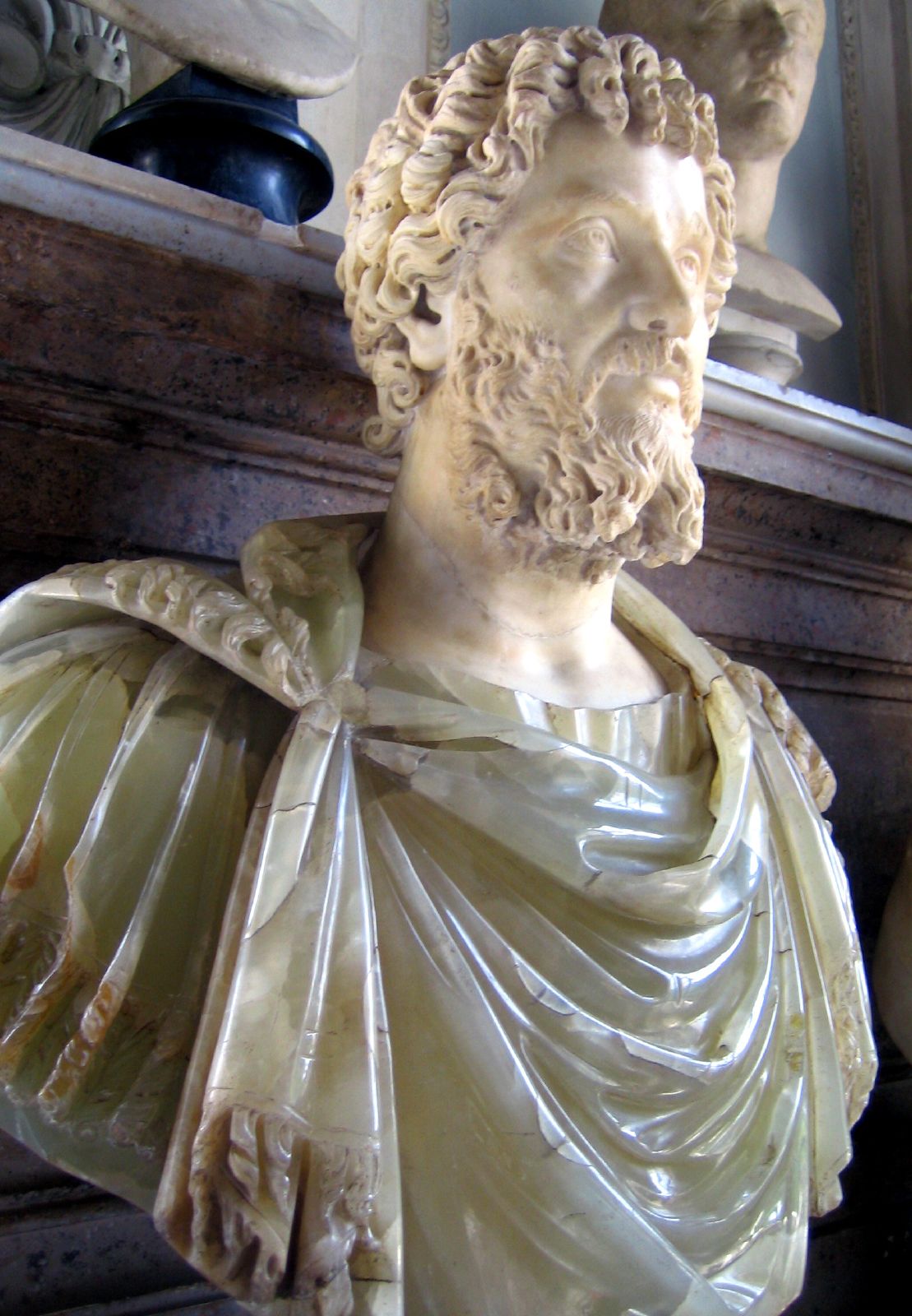
Born in Leptis Magna in what is now Libya, Septimius Severus had fought his way to the throne in 193, the Year of the Five Emperors, and went on to capture the Parthian capital of Ctesiphon. In his sixties and troubled by illness, he came to Britain to campaign against the tribes of Caledonia. He died at York on 4 February 211. His sons Caracalla and Geta were already co-emperors, and their rivalry soon became open hostility.
Severus spent his last years at the far northwestern edge of the empire. He brought his wife, Julia Domna, and both sons with him on a hard campaign north of Hadrian's Wall, partly to fight the Caledonians and partly to keep the two young men busy away from Rome. He died of illness in the legionary fortress at Eboracum. The historian Cassius Dio records his deathbed advice to his sons: be harmonious, enrich the soldiers, and scorn all other men.
His sons followed only the middle part. Caracalla made peace with the enemy and headed for Rome with Geta and their mother. The two brothers ruled together in open distrust, and before the year was out Caracalla had Geta killed, reportedly in their mother's arms.
Severus was cremated in York, and ancient writers say his ashes were placed in an urn of precious stone and carried back to Rome. So the man who had begun life on the North African coast died in a garrison town in northern England. He founded a dynasty that ruled until 235, and his habit of paying the army first shaped the troubled century that followed.
Key people: Septimius Severus, Caracalla, Publius Septimius Geta, Julia Domna