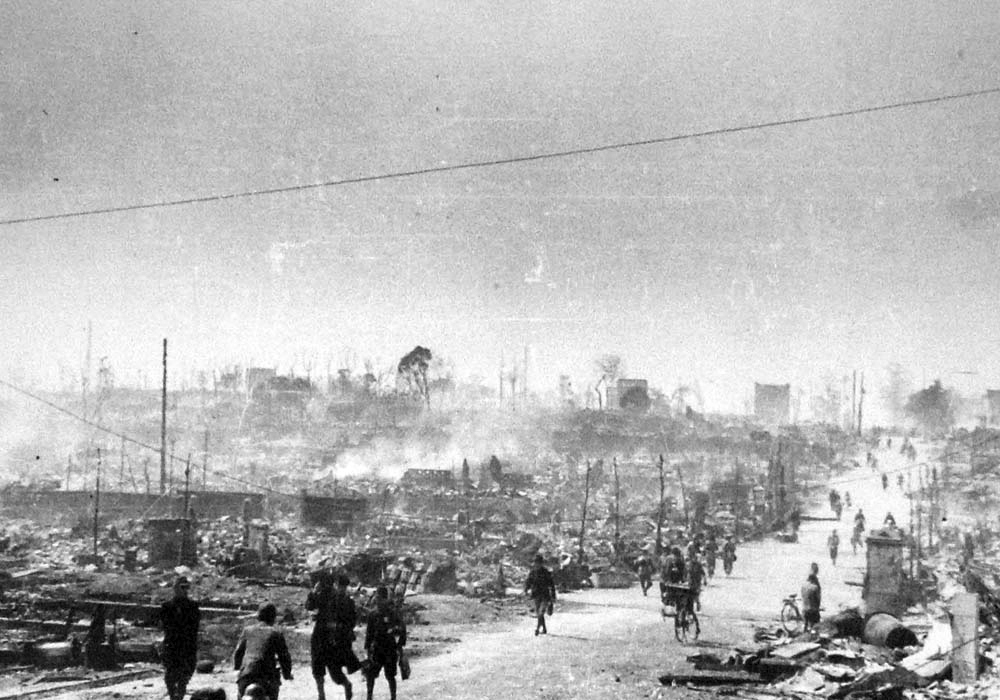
Code-named Operation Meetinghouse, the raid marked a change of tactics under Major General Curtis LeMay. Instead of precision attacks on factories from high altitude, the B-29s came in low, at night, and dropped clusters of napalm-filled bombs on the densely built districts of eastern Tokyo. Driven by gusts of up to 67 miles per hour, the fires merged into a conflagration. More than 90,000 people, and possibly over 100,000, died, and one million were left homeless.
American planners had studied the flammability of Japanese cities for years, and earlier high-altitude raids had done little damage. LeMay, under pressure to deliver results, ordered his crews to bomb from low altitude, where the denser air let the B-29s carry more bombs, and removed most of their guns and gunners to save further weight. On March 7 some crews flew low-level training missions without being told why.
It took two and three-quarter hours for the 325 bombers dispatched to take off from the Mariana Islands. Over Tokyo the attack lasted about two hours and forty minutes. Japanese air defences proved largely inadequate; 14 American aircraft and 96 airmen were lost.
On the ground, the city's civil defences were overwhelmed. The raid opened a campaign of firebombing against Japanese cities that continued until the surrender, and its morality has been argued over ever since.
Key people: Curtis LeMay