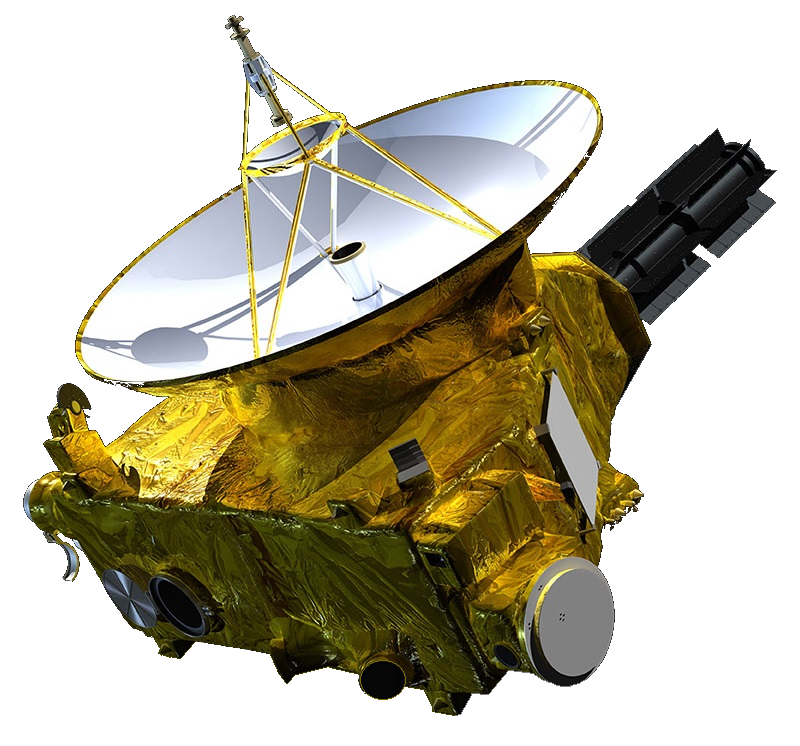
Launched in January 2006, New Horizons travelled nine and a half years and about five billion kilometers to reach Pluto. Its images revealed a surprisingly active world, with a vast heart-shaped plain of nitrogen ice, mountains of water ice as tall as the Rockies and a hazy atmosphere. Because the probe could not stop, it gathered data during the flyby and took more than a year to send it all home. It carried some of the ashes of Clyde Tombaugh, who discovered Pluto in 1930.
When New Horizons launched, Pluto was still officially a planet; the International Astronomical Union reclassified it as a dwarf planet seven months later. The probe, about the size of a grand piano, used a gravity boost from Jupiter in 2007 and spent most of its journey in hibernation.
Ten days before the encounter, it suffered a computer fault and went into safe mode, and engineers worked around the clock to restore it in time. At 11:49 UTC on July 14, 2015, it passed closest to Pluto. Because its antenna had to be pointed away from Earth while its instruments worked, the team waited nearly a day for a signal confirming it had survived. It arrived that evening to cheers at the Johns Hopkins Applied Physics Laboratory in Maryland.
The pictures astonished scientists. Pluto's bright heart, later named Tombaugh Regio, contained a young, crater-free plain of nitrogen ice called Sputnik Planitia, slowly churning like a lava lamp. New Horizons continued deeper into the Kuiper Belt and in 2019 flew past Arrokoth, the most distant object ever explored.
Key people: Alan Stern, Clyde Tombaugh