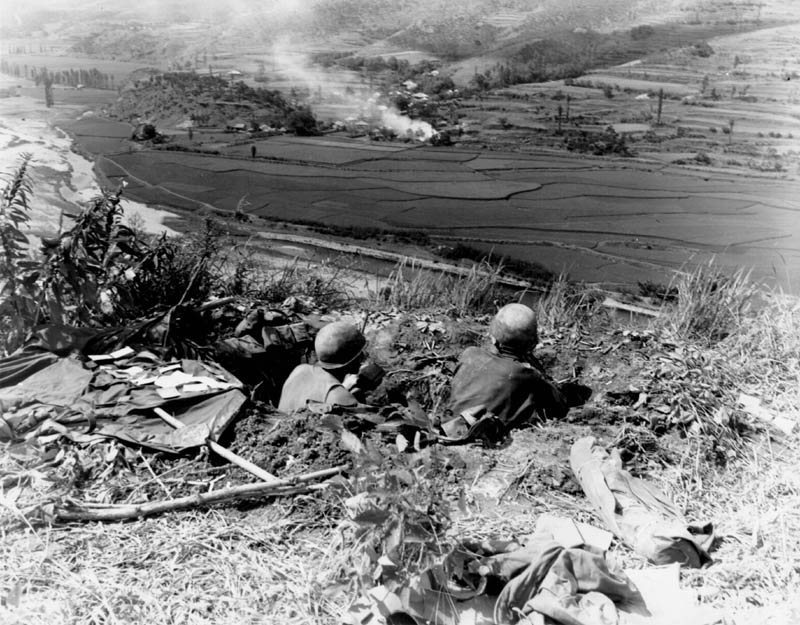
North Korean forces launched intense assaults against the shrinking Pusan Perimeter in late August 1950, testing the resolve of American, South Korean, and other UN troops crammed into the southeastern corner of the peninsula. The desperate defense, bolstered by continuous reinforcements arriving through the port of Pusan, held just long enough to enable General Douglas MacArthur's Inchon landing weeks later, turning the tide of the war.
By late August 1950, North Korean People's Army units had pushed South Korean and American forces into a shrinking pocket around the port city of Pusan, roughly 140 miles long and 100 miles wide. Commanders on the ground, including Lieutenant General Walton Walker, adopted a doctrine of 'stand or die,' shuttling reserves by truck and rail to plug breaches as they appeared along the Naktong River line.
Fighting around this time was marked by nighttime infiltration tactics from North Korean units and brutal, close-quarters combat in the hills overlooking the river. American reinforcements, including tanks and fresh infantry divisions, arrived just in time through the port, allowing the perimeter to hold despite repeated North Korean breakthroughs at places like the Naktong Bulge.
The perimeter's survival bought crucial time for General MacArthur to plan and execute the amphibious landing at Inchon on September 15, a maneuver that outflanked North Korean forces and reversed the course of the war within weeks. Without the grinding defense of Pusan through the summer, historians generally agree South Korea would have fallen entirely before any counteroffensive could be mounted.