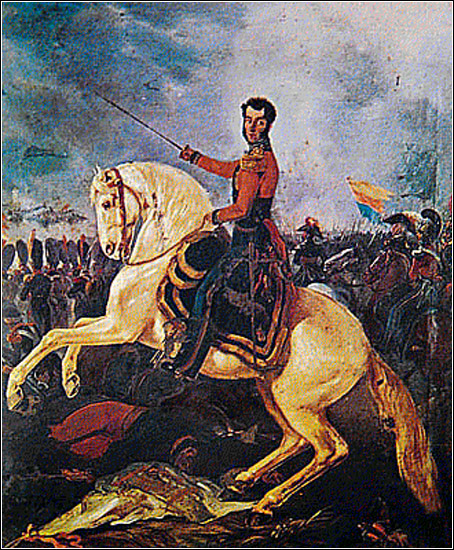
Upper Peru had been the scene of some of the earliest uprisings against Spain, in 1809, and of 16 years of guerrilla war. After Antonio José de Sucre's victory at Ayacucho in 1824, the last royalist forces collapsed, and Sucre called an assembly to decide the region's future. Rather than join Peru or the United Provinces of the Río de la Plata, the delegates chose independence. They named the country the Republic of Bolívar, soon changed to Bolivia, and the capital was renamed Sucre.
The silver mines of Potosí had made Upper Peru one of the richest parts of the Spanish empire, and both Lima and Buenos Aires wanted it. In 1809 juntas in Chuquisaca and La Paz declared themselves in charge in the name of the captive Spanish king, and although royalist troops crushed them, guerrilla bands kept fighting in the countryside for years.
After the battle of Ayacucho in Peru in December 1824, Sucre marched into Upper Peru, where the last royalist commander, Pedro Antonio Olañeta, was killed by his own men in April 1825. Sucre summoned delegates to Chuquisaca. On August 6, the anniversary of Bolívar's victory at Junín, they signed a declaration of independence.
Bolívar himself had doubts about creating a separate state but was won over by the gesture. The assembly named the country after him and asked him to write its constitution, which he did, proposing a president for life. Sucre became the first elected president in 1826, but he was wounded in a mutiny two years later and left the country. Bolivia lost its coastline to Chile in the War of the Pacific.
Key people: Antonio José de Sucre, Simón Bolívar, Casimiro Olañeta