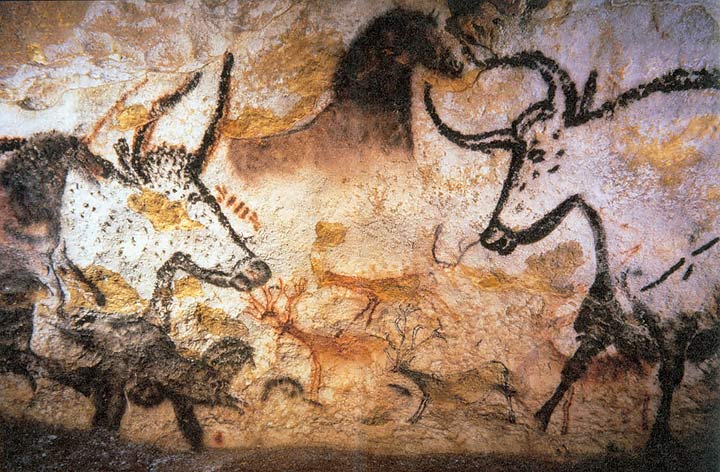
Eighteen-year-old Marcel Ravidat and three friends followed his dog Robot into a narrow opening in the Dordogne hillside and discovered chambers covered in Paleolithic paintings of horses, bison, and deer. The find, later called the 'Sistine Chapel of prehistory,' transformed understanding of early human artistic capability and drew millions of visitors before the cave was closed to the public in 1963 to preserve the art.
The boys had been searching for a legendary tunnel rumored to lead to treasure at a nearby manor. Instead, after Robot vanished into a hole left by an uprooted tree, they widened the gap and slid down into darkness, lighting their way with a makeshift oil lamp fashioned from a grease lamp bought at a local shop.
What their lamp revealed stunned them: walls and ceilings covered with vivid ochre and black paintings of aurochs, horses, and stags, some animals rendered nearly six feet long, painted some 17,000 years earlier by Upper Paleolithic humans using mineral pigments and hollow bones as airbrushes. Abbé Henri Breuil, a priest and prehistorian, authenticated the find within days.
The cave opened to the public in 1948 and by the 1950s drew over 1,200 visitors a day, whose breath and body heat introduced algae and calcite damage that forced its closure in 1963. Today tourists visit Lascaux II, a meticulous replica built nearby, while the original remains sealed and monitored, a fragile masterpiece nearly erased by its own fame.
Key people: Marcel Ravidat, Jacques Marsal