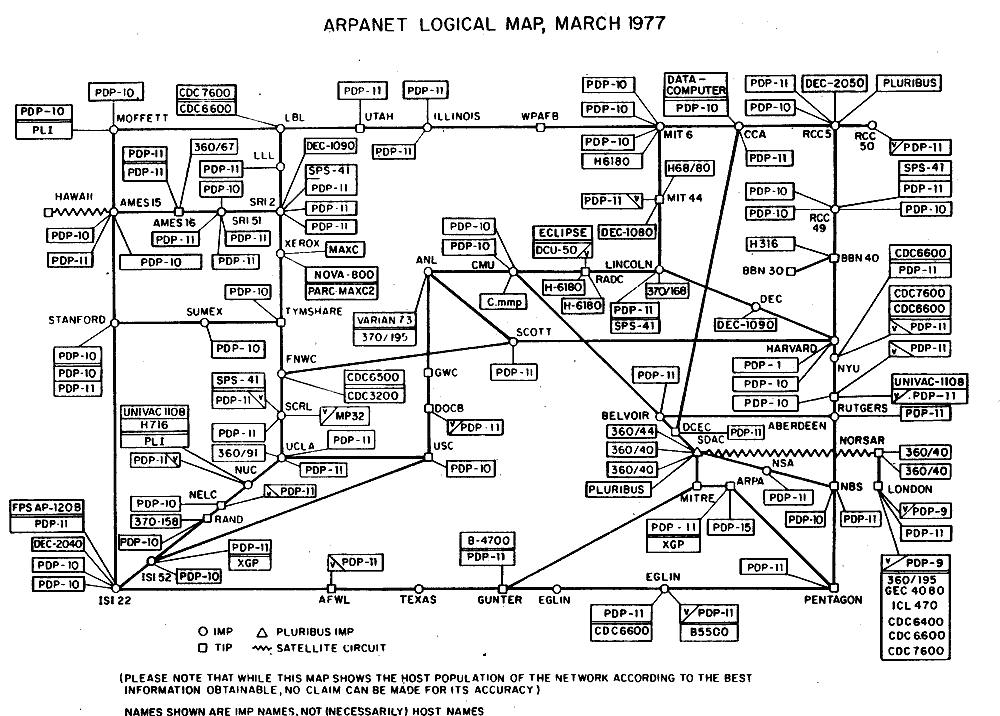
In a UCLA laboratory, a team led by computer scientist Leonard Kleinrock connected two bulky computers with a 15-foot cable and successfully transmitted data between them, testing the packet-switching technology that would underpin ARPANET. The experiment, funded by the Defense Department's Advanced Research Projects Agency, proved the fundamental concept months before the network's first remote connection between UCLA and Stanford. It marked one of the earliest practical steps toward the modern internet.
The machines involved were unglamorous: a Scientific Data Systems Sigma 7 talking to an Interface Message Processor, a refrigerator-sized minicomputer built by Bolt Beranek and Newman specifically to route ARPANET traffic. There was no dramatic message sent, no 'Watson, come here'—just a successful exchange of bits proving packet-switching worked outside of theory.
Kleinrock's lab would, weeks later, achieve the more famous milestone of the first host-to-host connection with Stanford Research Institute, during which the system crashed after the letters 'LO' of 'LOGIN' were transmitted. But this earlier, quieter local test on September 2 was the essential proof of concept, the moment computer networking stopped being an abstraction and became a working machine.
Key people: Leonard Kleinrock