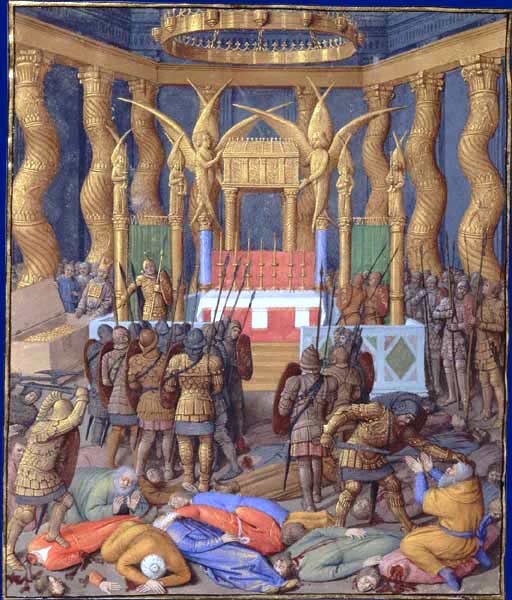
After a three-month siege that ended with the storming of the Temple Mount, Pompey the Great walked into the Holy of Holies, a space forbidden to all but the High Priest. His curiosity, rather than plunder, was said to motivate him — he reportedly left the treasures untouched but the violation of the sanctuary shocked Judea and marked Rome's absorption of the region into its sphere of control.
Jerusalem had been convulsed by a civil war between the Hasmonean brothers Hyrcanus II and Aristobulus II when Pompey, fresh from campaigns against Mithridates, arrived to arbitrate — and then simply annexed the prize. His legions battered down the Temple's northern wall after priests continued sacrifices even as soldiers scaled the ramparts around them, an image ancient historians found almost unbearably poignant.
When the wall fell, Pompey did something no foreigner had done: he walked into the Holy of Holies, the innermost sanctuary that only the High Priest could enter, once a year. Josephus records that he found it empty of any idol, to Roman puzzlement, and left its contents undisturbed. But the sacrilege of his presence there was, for many Jews, worse than any theft would have been.
The episode ended the last century of Judean self-rule under the Hasmonean dynasty. Judea became a client state, then eventually a Roman province, setting the stage for centuries of tension between Jewish religious life and imperial administration — tension that would erupt repeatedly, most catastrophically in the revolts of 66 and 132 AD.
Key people: Pompey the Great, Hyrcanus II, Aristobulus II