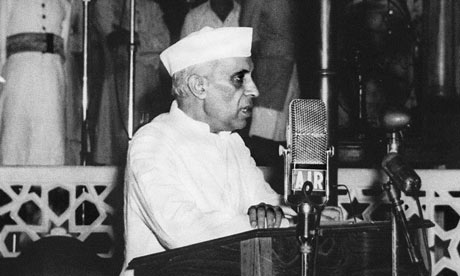
At the stroke of midnight, India emerged as a free nation, ending 190 years of British control. The moment was shadowed by the violent Partition that created Pakistan, displacing over 14 million people and killing hundreds of thousands in communal violence. Nehru became independent India's first prime minister, while Mahatma Gandhi, the movement's moral architect, was notably absent from the celebrations, fasting in Calcutta to quell riots.
Jawaharlal Nehru rose before the Constituent Assembly in New Delhi just before midnight and delivered one of the century's most quoted speeches: 'Long years ago we made a tryst with destiny, and now the time comes when we shall redeem our pledge.' Church bells rang, conch shells sounded, and crowds surged through the streets of Delhi and Bombay in celebration that had been building for decades of nonviolent struggle.
But independence arrived twinned with catastrophe. The same stroke of midnight split British India into two dominions, India and Pakistan, along lines hastily drawn by a British barrister, Cyril Radcliffe, who had never before visited the subcontinent. Trains arrived at stations on both sides of the new border loaded with corpses. Mahatma Gandhi, who had done more than anyone to win this freedom, refused to join the festivities; he sat fasting in Calcutta, trying to stop Hindus and Muslims from slaughtering one another. The joy of August 15 and the horror of Partition remain forever intertwined in South Asian memory.