Prince Emmanuel Maurice of Lorraine, digging a well on his estate near Resina, had laborers strike ancient marble roughly 65 feet underground—the first physical trace of Herculaneum found since the town vanished under volcanic material in the eruption that also destroyed Pompeii. Systematic, if crude, excavation followed under Austrian and later Bourbon rule, eventually revealing an ancient Roman town frozen by pyroclastic flow.

Following Napoleon's invasion of Spain and the collapse of royal authority, Santiago's cabildo formed a governing junta in the name of the deposed King Ferdinand VII, marking Chile's first step toward self-rule. Though still nominally loyal to the Spanish crown, the junta set in motion a process of growing autonomy that would culminate in outright independence declared by 1818 under Bernardo O'Higgins.

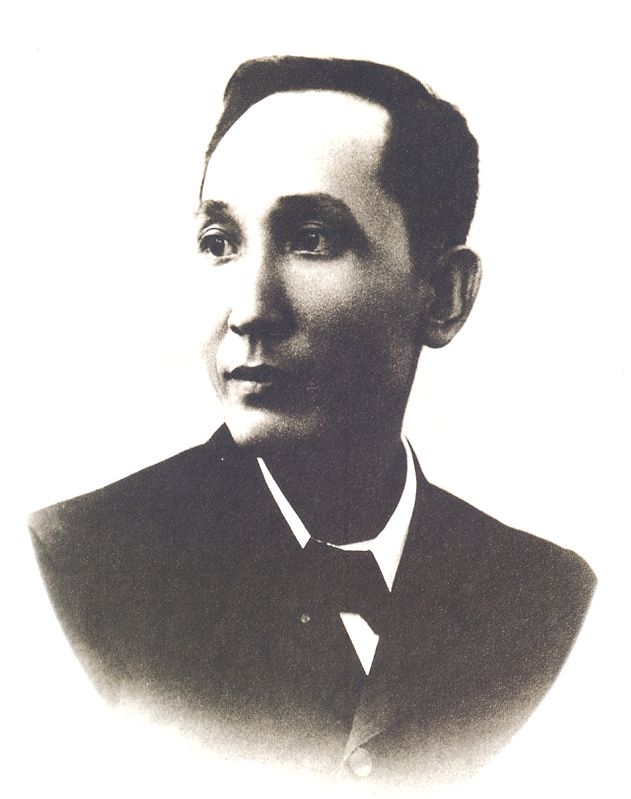
U.S. troops seized Apolinario Mabini, the paralyzed intellectual architect of the First Philippine Republic, near Rosario, Batangas. Mabini had served as Emilio Aguinaldo's chief adviser and drafted the republic's constitution. His capture, following Aguinaldo's own seizure earlier that year, marked another severe blow to organized Filipino resistance against American colonial occupation.
George Allen & Unwin published 'The Hobbit, or There and Back Again' in London, priced at seven shillings and sixpence with Tolkien's own illustrations. The first print run of 1,500 copies sold out by Christmas. Its success prompted Tolkien's publisher to ask for a sequel, eventually yielding 'The Lord of the Rings' seventeen years later.
Flying from a forward base in the Soviet Union, No. 617 Squadron — the famed 'Dam Busters' — and No. 9 Squadron struck the Tirpitz at Kaafjord with earthquake bombs designed to penetrate armored decks. One direct hit tore through the ship's bow, and while she did not sink outright, the damage was severe enough that she never sailed operationally again, ending Germany's last major naval threat in northern waters.

By the late 1950s, meteorologists were increasingly combining ship reports, aircraft reconnaissance, and the first rudimentary weather satellite data to track Pacific storm systems more reliably than ever before. Efforts around this period laid groundwork for the satellite meteorology that would soon transform typhoon and hurricane forecasting, saving countless lives in vulnerable coastal regions across Asia.

After decades as a strategic British naval base and a brutal siege during World War II that earned the entire population the George Cross, Malta achieved independence under Prime Minister George Borg Olivier. The new nation retained Queen Elizabeth II as head of state until becoming a republic a decade later, in 1974.


President Ferdinand Marcos signed the proclamation dated September 21, though it was publicly announced two days later, citing a supposed communist insurgency and staged ambush of his defense secretary. He dissolved Congress, suspended civil liberties, and jailed political opponents, journalists, and activists. The move entrenched Marcos and his wife Imelda in power until the 1986 People Power Revolution forced them into exile.

After decades of territorial disputes with neighboring Guatemala, which claimed the territory as its own, Belize achieved full sovereignty on this date. British troops remained stationed there for years afterward as a deterrent against invasion. George Cadle Price, the country's chief minister, became its first Prime Minister, having led the independence movement for nearly two decades.

The UN General Assembly voted to establish the International Day of Peace, initially observed on the opening day of the General Assembly's regular session each September. In 2001, the date was fixed permanently as September 21 every year, marked worldwide by a symbolic 'Peace Bell' ceremony at UN Headquarters and calls for a global ceasefire.

In a referendum held amid the Soviet Union's collapse, more than 99 percent of Armenian voters chose independence, formally ending seven decades of Soviet rule. The vote came just weeks after a failed coup against Mikhail Gorbachev in Moscow accelerated the breakup of the USSR. Armenia declared independence the same day, becoming one of the first Soviet republics to formally separate.

Though Hurricane Mitch made landfall in late October 1998, its catastrophic death toll—over 11,000 people, mostly in Honduras and Nicaragua—reshaped disaster response protocols across the region for years. Mitch's slow crawl across Central America, dumping feet of rain, triggered mudslides that erased entire villages, prompting a fundamental rethink of Central American flood preparedness.
After entering Mercury's orbit in March 2011, the MESSENGER probe finished its first full mapping campaign around this date, capturing images and data covering nearly the entire planet's surface for the first time. The mission revealed a shrinking, wrinkled world with a surprisingly large iron core and traces of water ice hidden in permanently shadowed polar craters.
