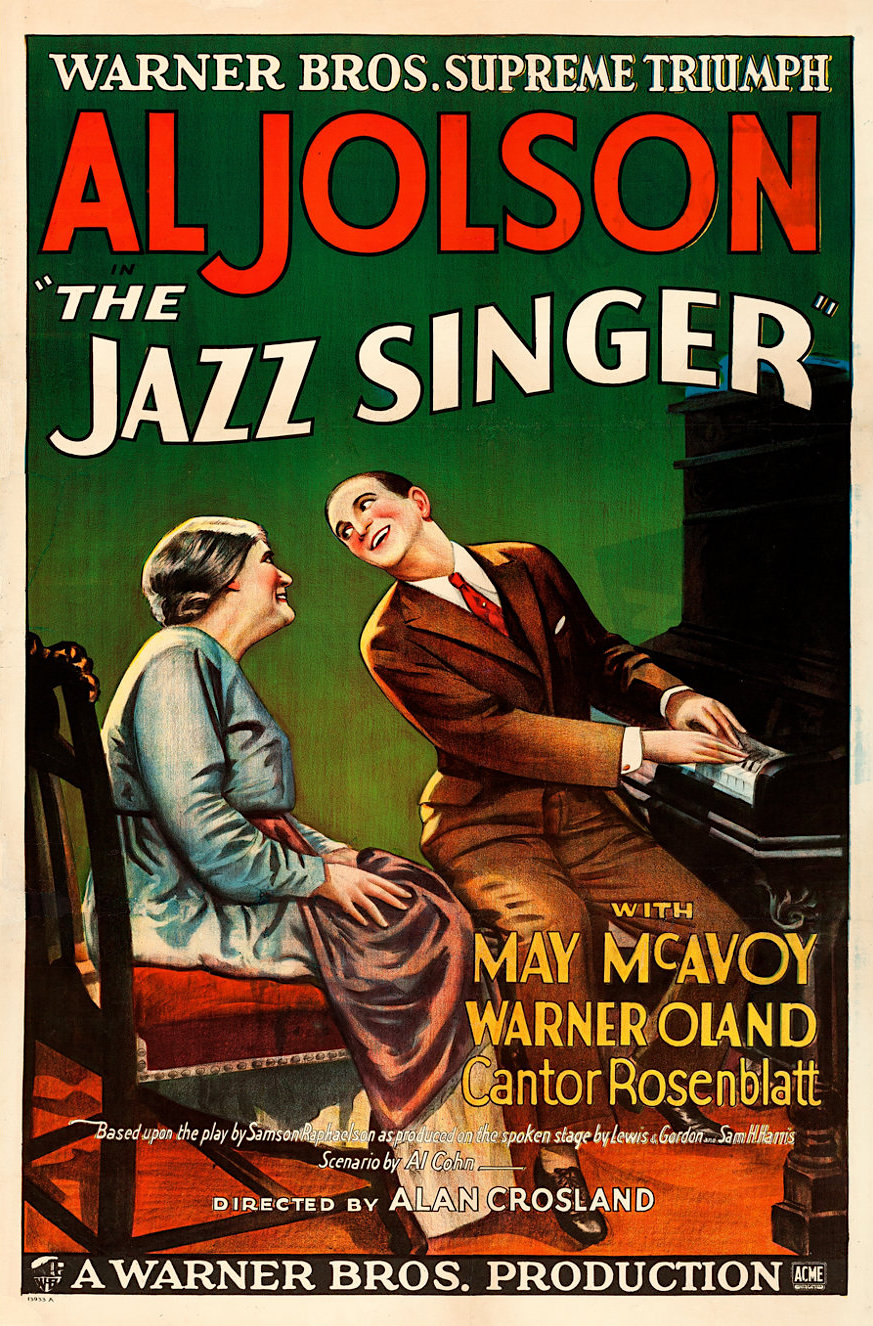
Warner Bros.' 'The Jazz Singer' opened at the Warners' Theatre, featuring Al Jolson's ad-libbed line 'You ain't heard nothin' yet' alongside synchronized musical numbers using the new Vitaphone sound-on-disc system. Though mostly silent with only patches of dialogue, its commercial success accelerated Hollywood's rapid conversion to sound, ending the silent film era within a few years and making countless silent stars obsolete overnight.
Warner Bros. was a struggling studio when it gambled on Vitaphone, a system that synchronized a film projector with a phonograph record. Most of 'The Jazz Singer' plays out like a conventional silent picture with a musical score, but a handful of scenes crackle to life with Al Jolson's actual singing voice—and, crucially, a snippet of improvised spoken dialogue that was never meant to be in the script.
Audiences at the premiere reportedly gasped when Jolson turned to the camera and spoke. The novelty was electric, and the film became a sensation, saving Warner Bros. from financial ruin and proving that sound was not a gimmick but the future.
The fallout was swift and often cruel. Actors with heavy accents or unconvincing voices saw careers evaporate; theaters scrambled to install costly sound equipment; and an entire art form built on pantomime and title cards was essentially finished within three years. Charlie Chaplin held out longest, but even he eventually surrendered to synchronized sound. The film itself, viewed today, is uncomfortable for its blackface minstrel numbers, a reminder that its technical revolution came wrapped in the era's casual racism.
Key people: Al Jolson