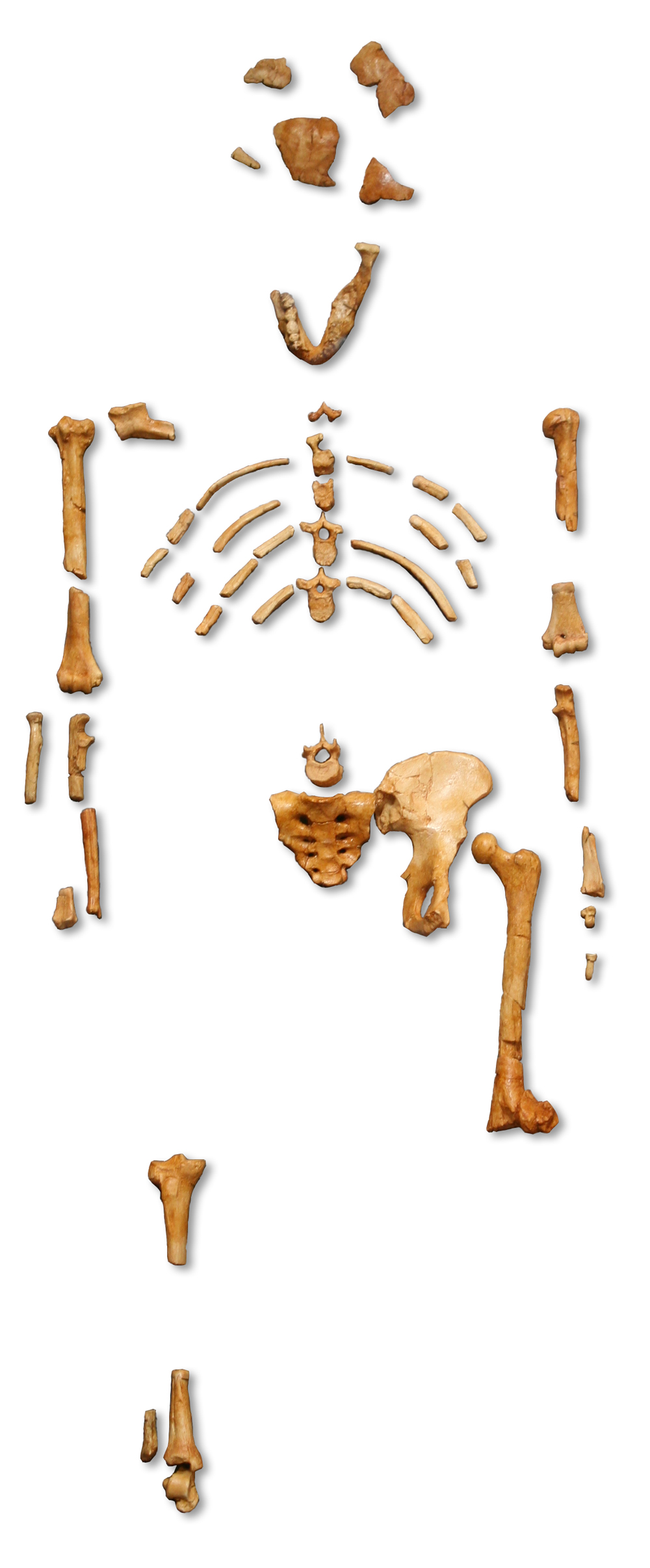
In the Hadar region of Ethiopia, Donald Johanson and graduate student Tom Gray spotted a fragment of arm bone eroding out of a hillside. Over the following weeks they recovered 40 percent of a skeleton belonging to Australopithecus afarensis, a species that walked upright nearly 3.2 million years ago. The find reshaped understanding of when bipedalism emerged in human ancestry.
The team almost skipped the survey that morning; Johanson later said he nearly stayed in camp. Instead he and Tom Gray drove out to a gully they'd already checked once, and on the way back Johanson glanced at a slope and saw a forearm bone that didn't look like any modern animal's. Digging by hand, sieving dirt, and celebrating with beers back at camp, the team played a Beatles cassette of 'Lucy in the Sky with Diamonds' on repeat that night, and the name stuck.
Lucy stood roughly three and a half feet tall, walked on two legs, and had a brain not much bigger than a chimpanzee's, proving that upright walking predated large brain growth in human evolution—a sequence scientists hadn't expected. Her skeleton, cataloged as AL 288-1, remains one of the most complete early hominid specimens ever found, and casts of her bones now sit in museums worldwide while the original is kept in a vault in Addis Ababa.