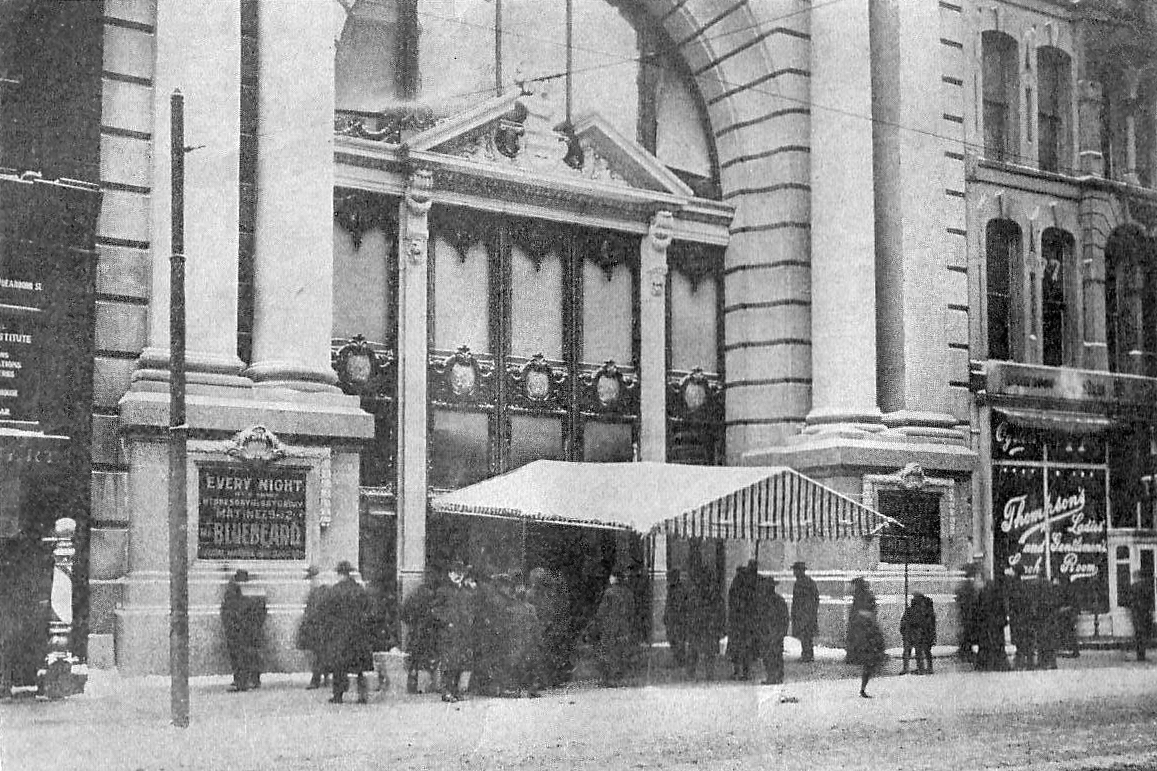
Advertised as "absolutely fireproof", the theatre had opened only five weeks earlier. During a performance of the musical Mr. Bluebeard, a light ignited a curtain, and the fire spread through the scenery. The asbestos safety curtain jammed, and when performers opened a stage door, a rush of air drove a fireball into the auditorium. Many exits were locked, hidden or opened inward. The disaster led to new fire codes, including exit doors that open outward and panic bars.
The Iroquois had seats for about 1,600 people, but on the afternoon of December 30, 1903, during the school holidays, more than 1,700 filled it, with hundreds more standing. Early in the second act, a spotlight sparked and set fire to a velvet curtain. Stagehands tried to beat it out, but the flames reached the scenery hanging above the stage.
The comedian Eddie Foy, in costume, stepped to the front of the stage and urged the audience to stay calm while the orchestra played. The fire curtain, meant to seal the stage from the audience, snagged on a light fixture and stopped partway. Actors fled through a rear door, and the draft sent flames and gases rushing over the heads of the audience in the balconies. Most victims died within minutes, many crushed or suffocated at exits whose doors were locked or had unfamiliar bolts.
The fire killed more people than the Great Chicago Fire of 1871. No one was ever convicted. Cities across the United States closed theatres for inspections, and the reforms that followed, including outward-opening doors and illuminated exit signs, became standard in public buildings.
Key people: Eddie Foy