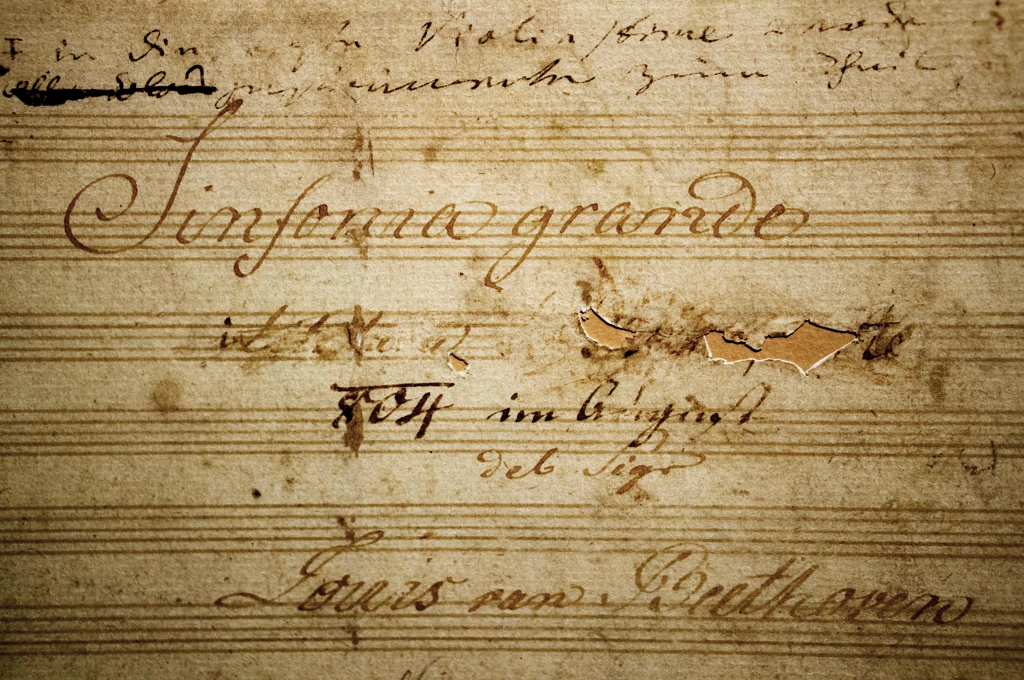
Beethoven had composed the symphony in 1803 and 1804 and originally planned to dedicate it to Napoleon Bonaparte. When Napoleon crowned himself emperor in 1804, Beethoven, according to his pupil Ferdinand Ries, tore up the title page in fury. Longer and more turbulent than any symphony before it, the Eroica puzzled its first audiences; one listener reportedly called out an offer to pay another kreuzer if it would only stop. It is now seen as the opening of Beethoven's middle period and a landmark of Romantic music.
The symphony had already been played privately in the palace of Prince Lobkowitz, who paid for exclusive rights to it for a period. The public premiere on April 7, 1805, gave Viennese audiences their first chance to hear it, and many did not know what to make of it. At nearly 50 minutes it was about twice as long as a typical symphony by Haydn or Mozart, and its first movement contained harsh dissonances and a horn entry so early that listeners assumed the player had made a mistake.
The story of the dedication comes from Ferdinand Ries, who said Beethoven reacted to news of Napoleon's coronation by exclaiming that he was "nothing more than an ordinary man" and would "trample on the rights of man". Beethoven scratched out Napoleon's name on the title page so violently that he tore a hole in the paper; the manuscript copy still shows it.
The published score of 1806 bore a new title, Sinfonia Eroica, "composed to celebrate the memory of a great man". Critics were divided, but within a generation the Eroica was regarded as the work that changed the symphony forever.
Key people: Ludwig van Beethoven, Napoleon Bonaparte, Prince Lobkowitz