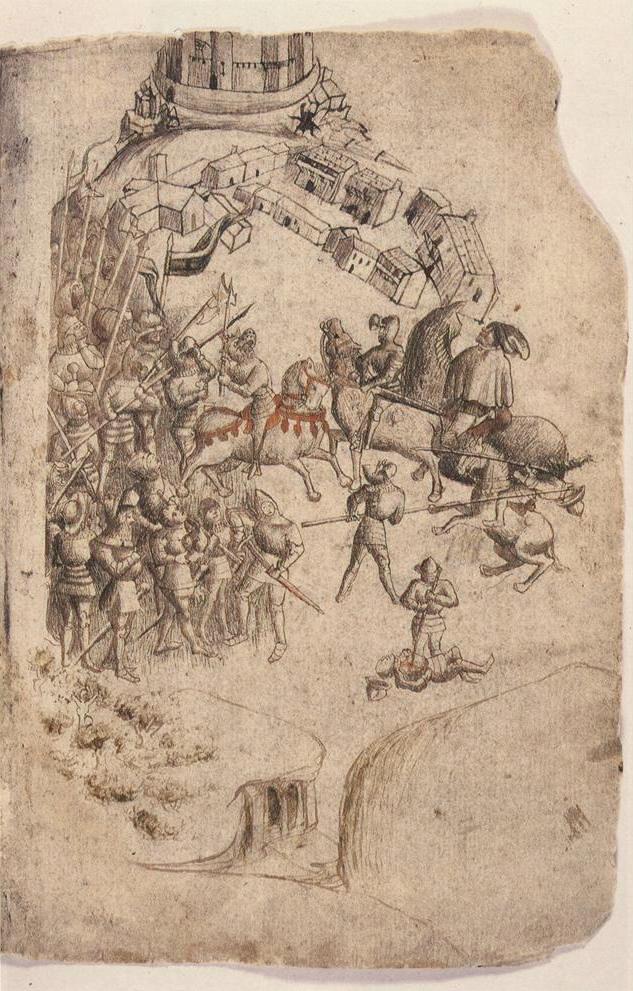
Edward II had marched north with perhaps 15,000 to 20,000 men to relieve the besieged English garrison of Stirling Castle. Bruce, with a smaller army, chose ground between marshes and the Bannock Burn. On the first day he killed the English knight Henry de Bohun in single combat. On the morning of June 24, the Scots' tightly packed spearmen, called schiltroms, advanced and pinned the English cavalry against the stream. Edward fled, and Bruce's hold on the Scottish crown was secured.
Robert the Bruce had seized the throne in 1306 after killing a rival, and spent years fighting both English armies and Scottish enemies. By 1314 he had captured most English-held castles. Stirling's commander agreed to surrender if not relieved by midsummer, which forced Edward II to bring a large army north.
On June 23, as the armies met, the English knight Henry de Bohun spotted Bruce riding a small pony in front of his lines and charged him with a lance. Bruce sidestepped and split de Bohun's skull with an axe, breaking its shaft. His commanders scolded him for the risk; he reportedly replied only that he regretted his good axe.
The next morning, the Scots attacked. The English army, crowded on boggy ground by the burn, could not deploy its archers effectively, and its heavy cavalry was trapped against the Scottish spears. Many English soldiers drowned trying to escape across the stream. Edward was led away from the field and eventually escaped by sea from Dunbar. England did not formally recognize Scottish independence until 1328.
Key people: Robert the Bruce, Edward II of England, Henry de Bohun