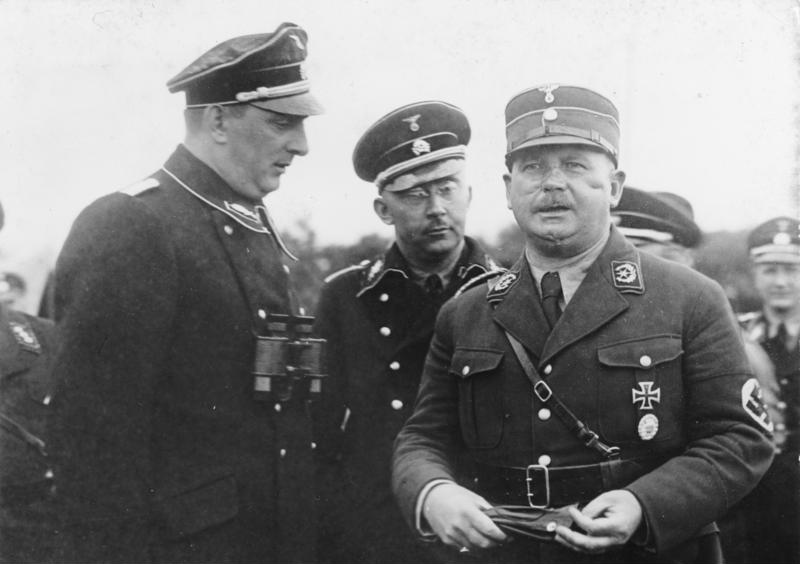
Röhm's SA had some three million members and wanted to absorb the army, alarming generals and business leaders whose support Hitler needed. Urged on by Hermann Göring and Heinrich Himmler, Hitler accused Röhm of plotting a coup. The SS and Gestapo killed SA leaders and settled scores with others, including the former chancellor Kurt von Schleicher. At least 85 people died, and many estimates are far higher. The army's support helped Hitler become head of state after President Hindenburg's death that August.
By 1934 the SA's street fighters, who had helped bring the Nazis to power, had become a liability. Röhm spoke openly of a "second revolution" and of merging the army into his militia. The army's leaders, and President Paul von Hindenburg, made it clear they expected Hitler to restrain him. Himmler and Göring, who saw Röhm as a rival, assembled a file of forged evidence of a planned putsch.
Early on June 30, Hitler flew to Munich and drove to the Hanselbauer Hotel at Bad Wiessee, where Röhm and other SA leaders were staying. He burst into Röhm's room with a pistol and had him arrested. That day and the next, SS squads shot SA commanders in Munich and Berlin. Röhm was offered a pistol to kill himself and refused; he was shot in his cell on July 1.
The killings went far beyond the SA. Schleicher and his wife were shot at their home, and Gustav von Kahr, who had helped crush Hitler's putsch in 1923, was murdered. On July 13 Hitler told the Reichstag he had acted as "the supreme judge of the German people". A law retroactively declared the killings legal.
Key people: Adolf Hitler, Ernst Röhm, Heinrich Himmler, Hermann Göring