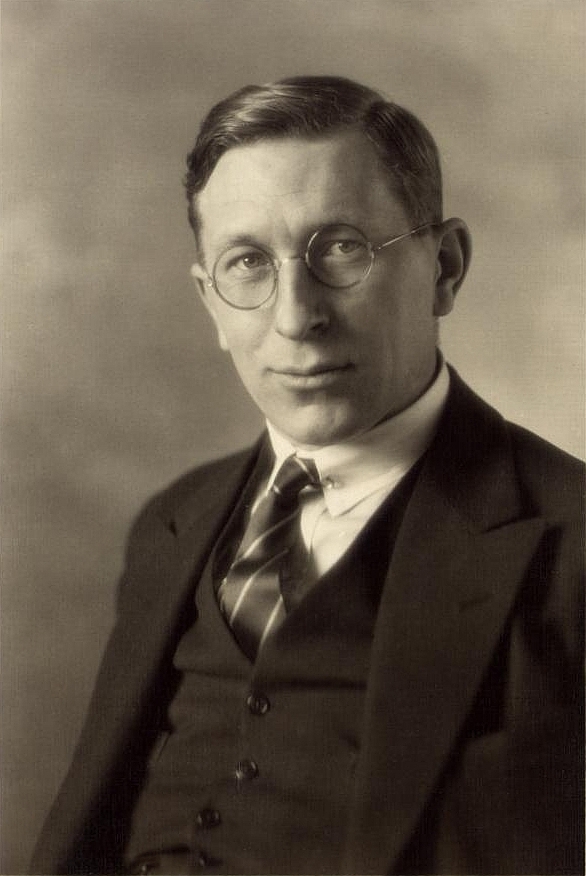
Banting, a young surgeon, had an idea to extract the pancreas's internal secretion by tying off its ducts so that the digestive part of the gland wasted away. John Macleod, head of the physiology department, lent him laboratory space and dogs for the summer, and Best to help. Their extract lowered blood sugar in diabetic dogs. Within six months it had been purified and tested on a human patient, and in 1923 Banting and Macleod received the Nobel Prize.
Scientists had known since the 1880s that removing the pancreas caused diabetes in dogs, and suspected that clusters of cells in the gland, the islets of Langerhans, produced a hormone that controlled blood sugar. Several researchers had tried to extract it and failed, because digestive enzymes from the rest of the pancreas destroyed it.
Banting had read an article about ligating the pancreatic ducts, and in May 1921 he began working in Macleod's laboratory in Toronto with Best, a 22-year-old student. Through a hot summer they operated on dogs, often losing them to infection. On July 27 they prepared an extract from a degenerated pancreas and injected it into a diabetic dog, whose blood sugar fell.
That autumn the biochemist James Collip joined the team and produced a purer extract. In January 1922, it saved the life of a 13-year-old boy, Leonard Thompson. The Nobel Prize of 1923 went to Banting and Macleod. Banting, angry that Best was left out, gave him half his prize money, and Macleod shared his with Collip. The team sold the patent to the University of Toronto for one dollar each.
Key people: Frederick Banting, Charles Best, John Macleod