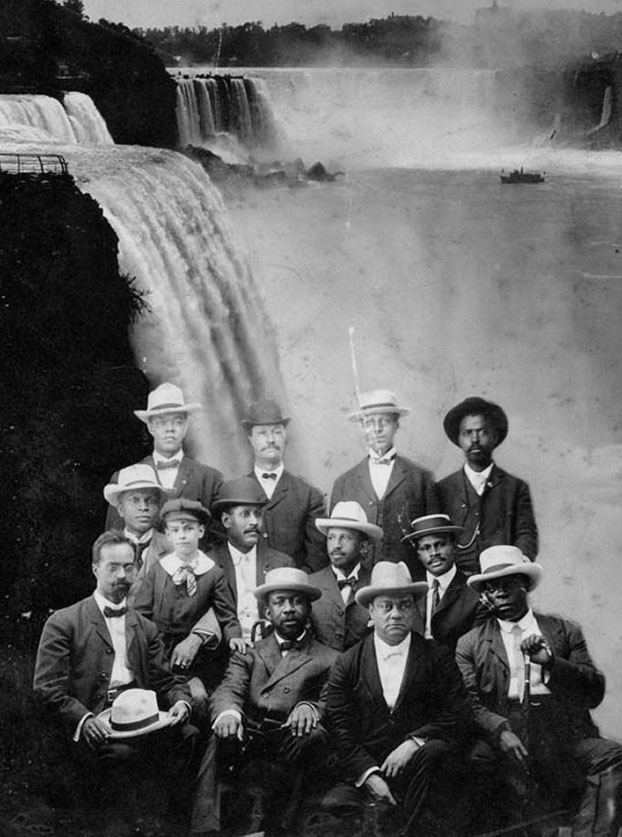
Meeting on the Canadian side of Niagara Falls after being denied hotel rooms in New York, W.E.B. Du Bois and roughly thirty Black professionals launched the Niagara Movement, rejecting Booker T. Washington's gradualist approach to racial progress. The group demanded immediate voting rights, an end to segregation, and equal educational opportunity, laying philosophical groundwork later absorbed into the NAACP, founded in 1909.
The location itself told a story: the founders had planned to meet in Buffalo, New York, but hotels there refused to serve Black guests, so the group crossed the border to Fort Erie, Ontario, where Canadian establishments would host them. It was a small, bitter irony that men fighting American racism found refuge from it only by leaving the country.
Du Bois drafted the group's "Declaration of Principles," a document sharp with impatience. It rejected the accommodationist philosophy of Booker T. Washington, then the most powerful Black leader in America, who counseled economic self-improvement over direct political agitation. Du Bois instead demanded the immediate exercise of full citizenship rights guaranteed by the Constitution.
The Niagara Movement never grew large — internal funding problems and Washington's considerable influence over Black institutions limited its reach — but its uncompromising language and its founders, including journalist Ida B. Wells-adjacent allies and lawyers like William Monroe Trotter, fed directly into the founding of the NAACP four years later, with Du Bois as its first director of publications.
Key people: W.E.B. Du Bois, William Monroe Trotter