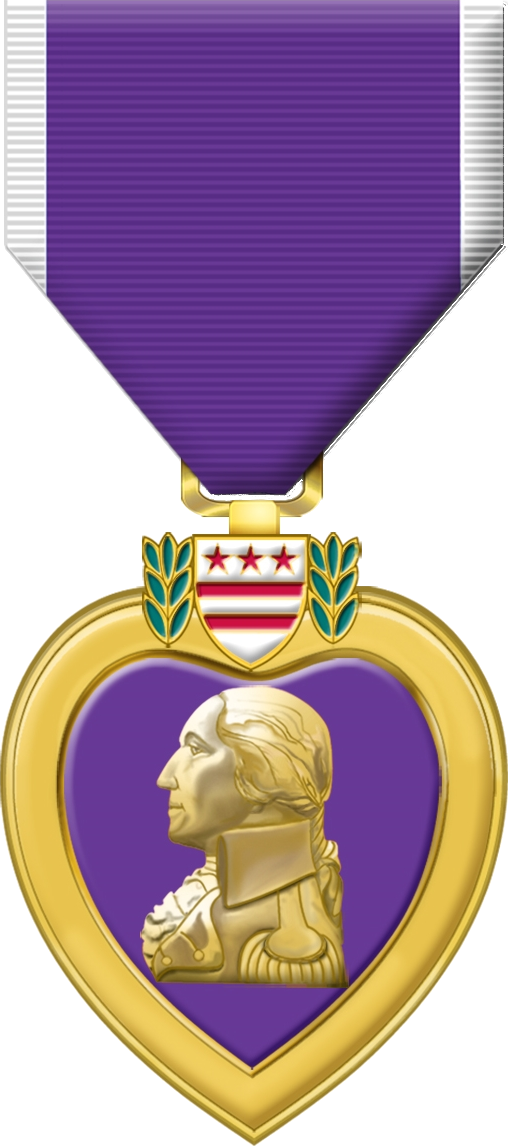
General George Washington ordered the creation of the Badge of Military Merit, a purple cloth heart awarded to soldiers for 'any singularly meritorious action.' Only three enlisted soldiers received it during the Revolutionary War before the honor fell into disuse. It was revived in 1932, on Washington's 200th birthday, as the modern Purple Heart, now awarded to U.S. service members wounded or killed in combat.
Weeks after Panama declared independence from Colombia with covert American backing, its assembly ratified a treaty granting the U.S. a 10-mile-wide zone across the isthmus and rights to build a canal, in exchange for $10 million and annual payments. Negotiated by a French engineer acting as Panama's envoy without ever setting foot back in the country, the treaty shaped a century of resentment before Panama regained full control in 1999.

In the pre-dawn hours, U.S. Marines waded ashore on Guadalcanal and nearby Tulagi, catching the Japanese garrison by surprise and seizing an unfinished airstrip within a day. The six-month campaign that followed, fought through malaria-ridden jungle and brutal naval battles in 'Ironbottom Sound,' marked the turning point when the Allies shifted from defense to offense in the Pacific.

A day after the Enola Gay dropped the first atomic bomb used in war, President Truman's announcement and early wire reports revealed to a stunned public the existence and destructive power of nuclear weapons. Hiroshima lay largely flattened, with tens of thousands already dead and thousands more dying in the following weeks from burns and radiation sickness.

American B-29 bombers firebombed Nagoya in the closing days of World War II, destroying large sections of the city including Nagoya Castle, a symbol of Tokugawa-era power built in 1612 and famed for its golden dolphin-like shachihoko roof ornaments. The castle's main keep, along with priceless historical artifacts, was consumed in the flames; it was later rebuilt in concrete in 1959.

Following disputed reports of North Vietnamese attacks on U.S. destroyers, Congress passed the Gulf of Tonkin Resolution almost unanimously, authorizing the president to take 'all necessary measures' to repel aggression in Southeast Asia without a formal declaration of war. It became the legal basis for the massive escalation of American combat operations in Vietnam over the following decade.

Ghana under Kwame Nkrumah became the leading voice for pan-African unity in the mid-1960s, pressing for a continental government to overcome the fragmentation left by colonial borders. Nkrumah's vision, though never fully realized, laid the intellectual groundwork for the Organisation of African Unity and shaped decades of debate over African political integration.

NASA selected 35 new astronaut candidates, the first class to include women and became the first to admit them, among them physicist Sally Ride. The announcement marked a deliberate break from the all-male, mostly military astronaut corps of earlier decades, reflecting new eligibility rules that opened astronaut selection to scientists and engineers regardless of test-pilot experience.
