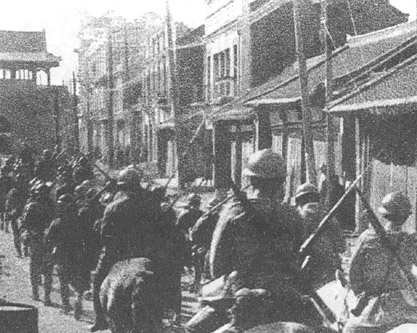
Lieutenant Kawamoto Suemori of the Japanese Kwantung Army detonated a small charge on a section of track belonging to the South Manchuria Railway near Mukden. Barely damaging the line, the explosion nonetheless became the pretext for a full military occupation of Manchuria within months. The League of Nations condemned Japan's aggression, but toothless sanctions did nothing to stop the march toward the Second Sino-Japanese War.
The bomb that Lieutenant Kawamoto Suemori planted was so weak that a train passed over the damaged rail minutes later without derailing. That inconvenient detail did not stop the Kwantung Army from immediately accusing Chinese soldiers of sabotage and shelling a nearby Chinese garrison before dawn. Within hours, Japanese troops seized Mukden; within months, they controlled all of Manchuria.
Tokyo's civilian government had not authorized the operation, and it barely tried to rein in its own army afterward. The puppet state of Manchukuo, installed the following year with the deposed Qing emperor Puyi as a figurehead, gave Japan a resource-rich foothold on the Asian mainland and a staging ground for further expansion. China appealed to the League of Nations, which sent the Lytton Commission and eventually declared Japan the aggressor — prompting Japan to simply withdraw from the League in 1933 rather than comply.
Historians now treat the Mukden Incident as the opening act of a conflict that would not truly end until 1945. It demonstrated how a junior officer's fabricated crisis, unchecked by civilian oversight, could drag an empire into a war of conquest that ultimately consumed it.
Key people: Kawamoto Suemori, Puyi